Lakehead California. Shasta County
Pictures published :3
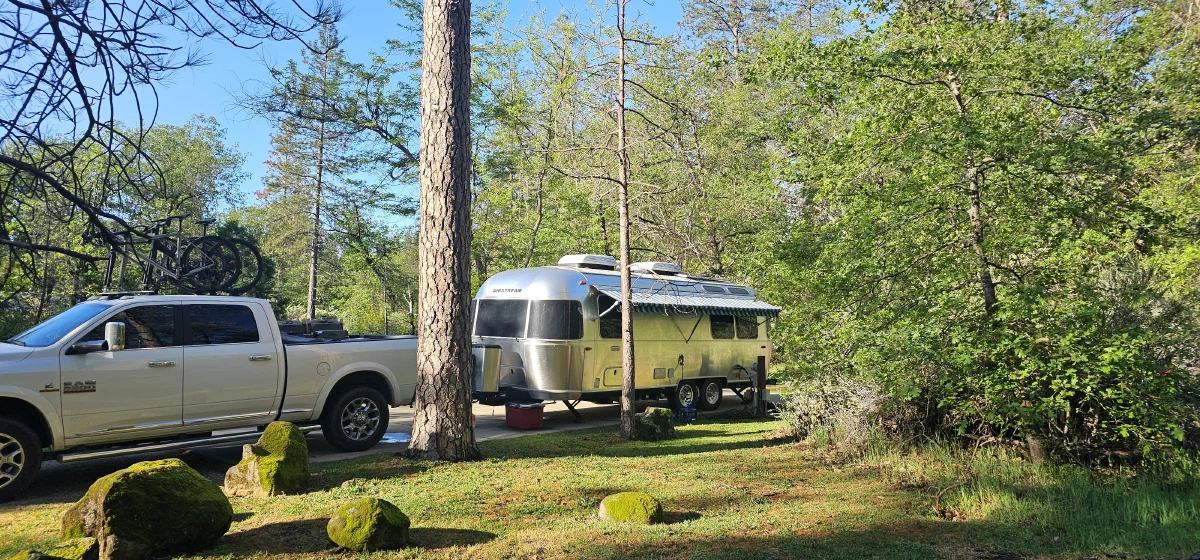
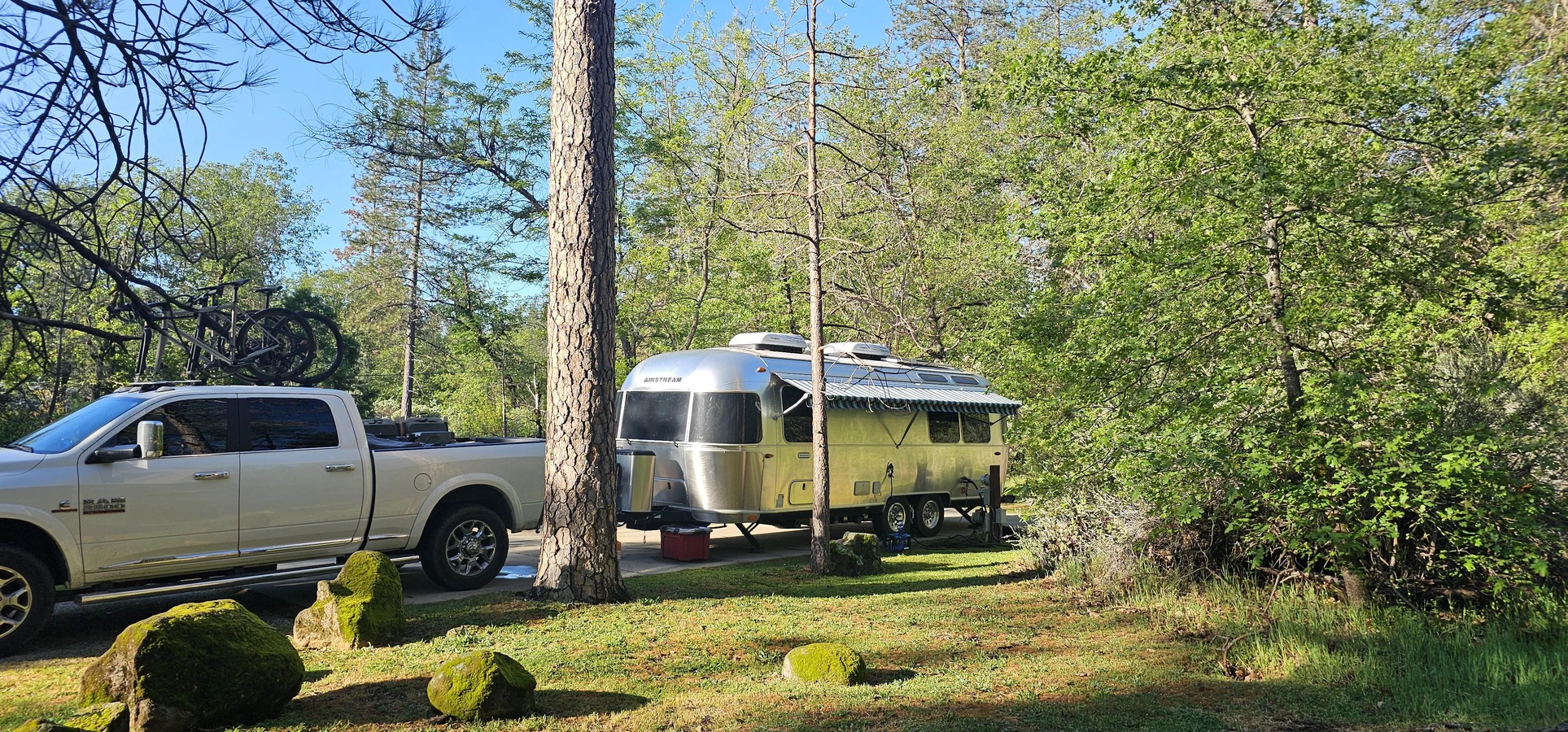
Where we camped
Campground
Antlers Resort and Marina We really like this campground, however it had limited spots that would supply reliable Starlink service. The campground/marina was really cool, good access to lake Shasta and decent walks with the dogs. It seems they also rent houseboats and provide large craft launch services. We were going to book online and decided not to as we wanted to see if the site would provide good visibility for Starlink. We learned an important lesson, this campground charges $55 per night if booked online. When we arrived and acquired a late check-in ticket the price was 10% less. We could have easily stayed for multiple days at the rate on the late check-in sheet. We will likely stop booking online same day if an abundance of campsites are available in an area. I suspect online booking services take a cut from campground operators for providing the platform. My long term hope is that RVs and campers are not forced to pay platform fees for convenience.
Power consumption and billing
The campground was charging $0.43 per kWh of electricity used. The pay per Kilowatt Hour was new to us on a overnight stay. I am not surprised as I have seen many electric vehicles in campgrounds charging (which I feel is over usage). I also know many RVs that have substantial battery packs that can consume massive amounts of power to charge. A quick google search show that a typical kWh capacity of a Tesla is between 60 and 100.
At 12v DC 100 Amp hours == 1.2 kWh. I would say a standard build for many is between 200 and 600 Amp hours. At 600 Amp hours a 100% charge would cost ~$3 dollars. I suspect many campgrounds will start to invest in per kWh charges as battery storage continues to advance and the cost for consumers to acquire storage decreases.
Is it legal? Is it fair? Does a per kWh charge make sense?
Is billing a per unit rate legal at campgrounds for short duration stays?
Online research (April 2026) shows that campgrounds can charge a per unit fee for electricity. Often the fees are added to the cost of a site with power. EG: Sites with power at $45 per night and without power $35.
Another point of consideration is the cost that a campground incurs tracking and billing the power usage at each pedestal. My assumption is that the industry would implement smart meters. A smart meter cost is about $160. Volume discounts are likely not available to campground operators as volume discounts for smart meters start to kick in at the 10K unit mark.
A Ten dollar charge would imply that a RV or Electric vehicle would utilize ~23 kWh (@$0.43).
Off the cuff analysis shows that a modest user of electricity will likely pay less if billed a per unit fee, if the site charge does not include a power markup and a per kWh rate. A pedestal would need to bill at 23 kWh per day and a 33% overhead would take 231 days at full utilization to pay for itself (160/.03)/23. I don’t know what the averages are for power usage at this site, I think that 5 kWh a day seems fair, I calculated at 1 kWh as that is what we used while on site.
The opposite side of this is that if a 100 kWh battery pack arrives and charges the lost opportunity cost is about $43 dollars, leaving the campground provider to pick up over $30 ($0.33 kWh cost) I know, I am mixing cost and billable in the same sentence, however I feel thinking about the difference is important.
Quick research shows that a per unit cost for the meters is ~$160
Per kWh cost using United States Average Electricity rates California (April 2026) $0.32 kWh. This implies that $0.10 goes to the campground and 33% would be applied to the payback for the equipment.
The season in Lakewood is May - August. Assuming a 60% occupancy rate, which I think is high, amortization is likely to take Two plus years. I did not factor in any head end or software services. I am only thinking of the per pedestal cost. I think a reasonable assumption for software would be between 2k and 10K likely based upon usage.
My thoughts and takeaways
I am currently of the opinion that billing consumers by kWh is a good thing. However I would like to see the cost of a site go down. Over usage by electric vehicles and large electrical storage systems will force operators to recoup costs by billing a per unit fee. The amortization is tough as the cost per meter and software (RF Mesh/PLC/headend/Data Base) to properly bill and track are high. Likely multiple years depending upon utilization. However if you have a competitive rate and can charge a drive in user a utilization fee, having distributed sites allowing for electric vehicle charging seems feasible and could quickly recoup the build cost.
Resources and References
Subscription Platform/Campsite management
Campsite Charges extra for electricity?
Electricity cost average by state
Smart meter deployment
Smart meter in use
Subscribe
If you would like email or rss feed updates. Visit the Subscribe page
LakeWood
Share with others